
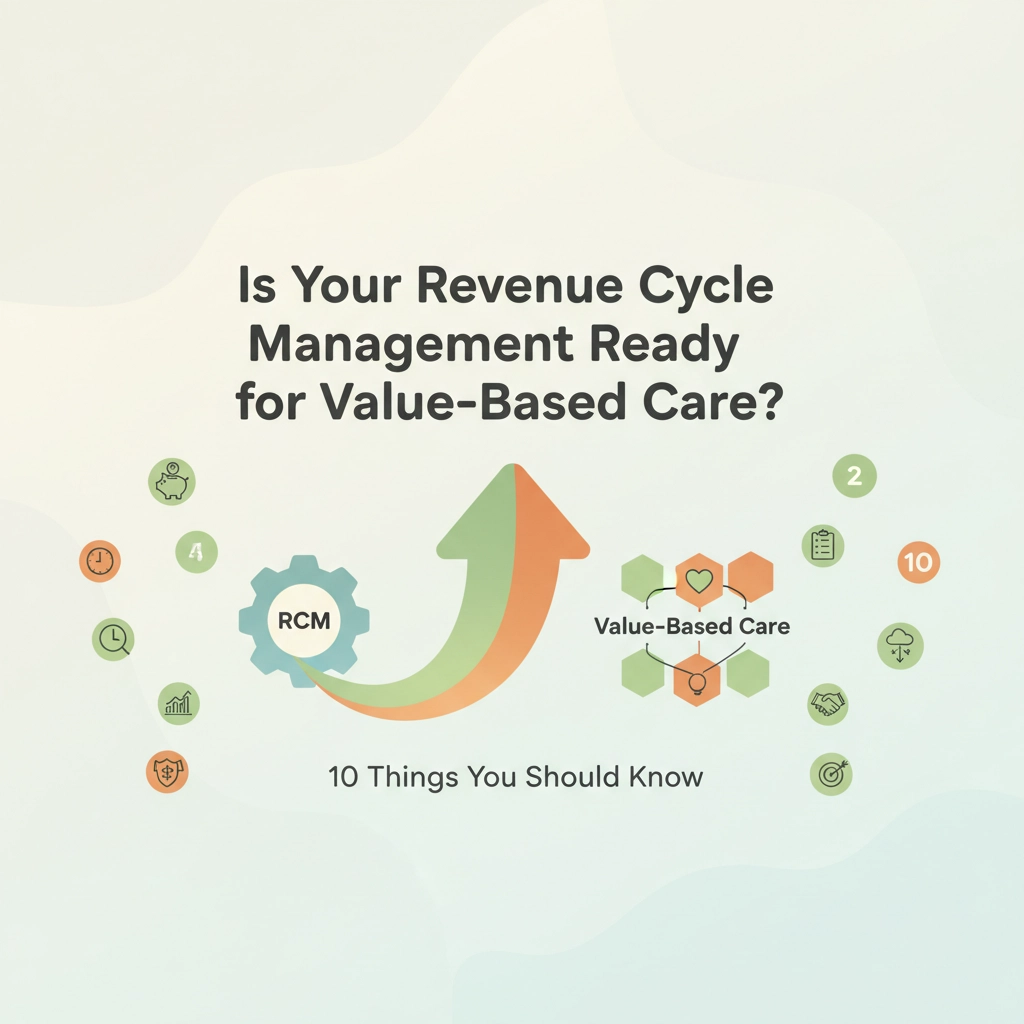
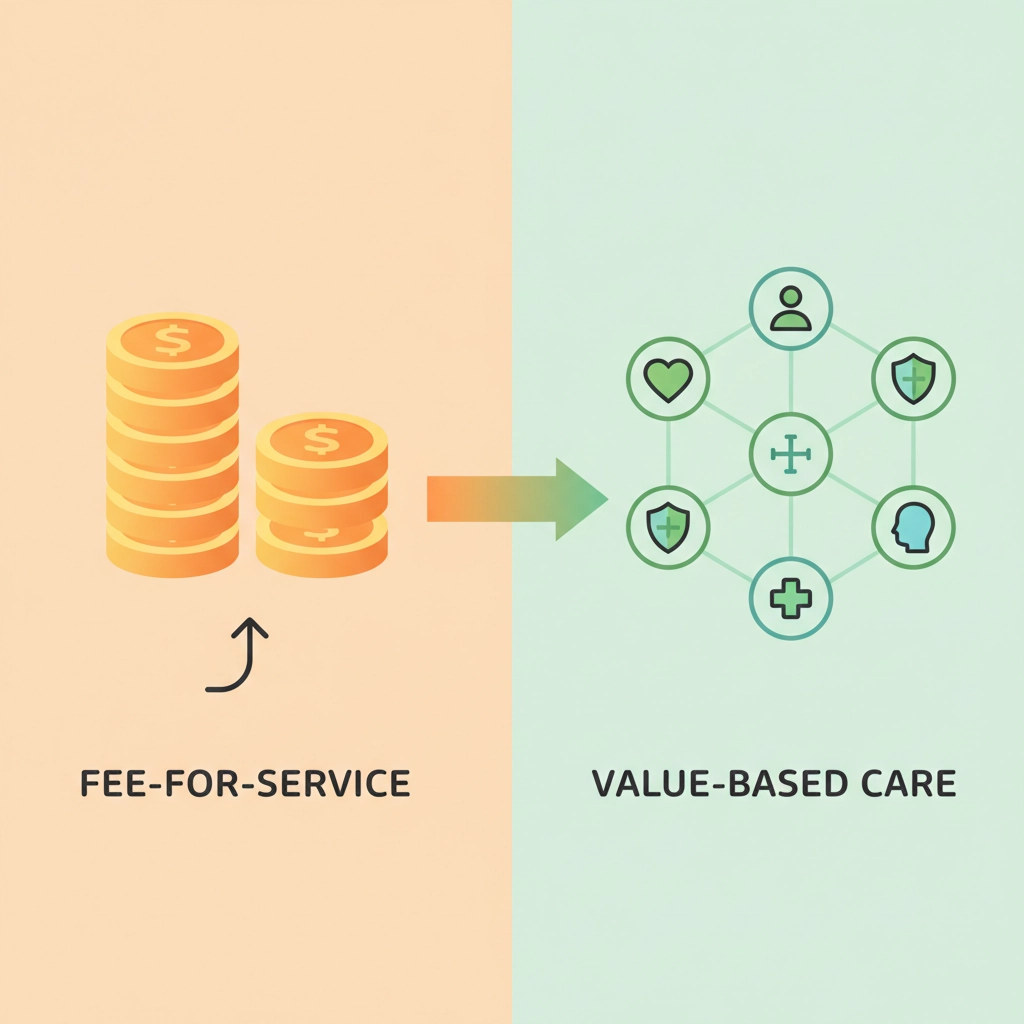
Healthcare is shifting fast. While you’re busy keeping patients healthy and staff motivated, payment models are evolving from “do more, get paid more” to “deliver better outcomes, get rewarded.”
If your revenue cycle management is still built for fee-for-service, you’re not just missing opportunities: you’re setting yourself up for cash flow headaches down the road.
Value-based care isn’t some distant future anymore. It’s happening now, and practices that adapt their RCM early are seeing 15-20% improvements in collections. Here’s what you need to know to get your revenue cycle ready.
1. It’s All About Outcomes, Not Volume
The biggest mindset shift? You’re no longer paid for how many procedures you perform. Value-based care rewards you for keeping patients healthy, satisfied, and out of expensive emergency situations.
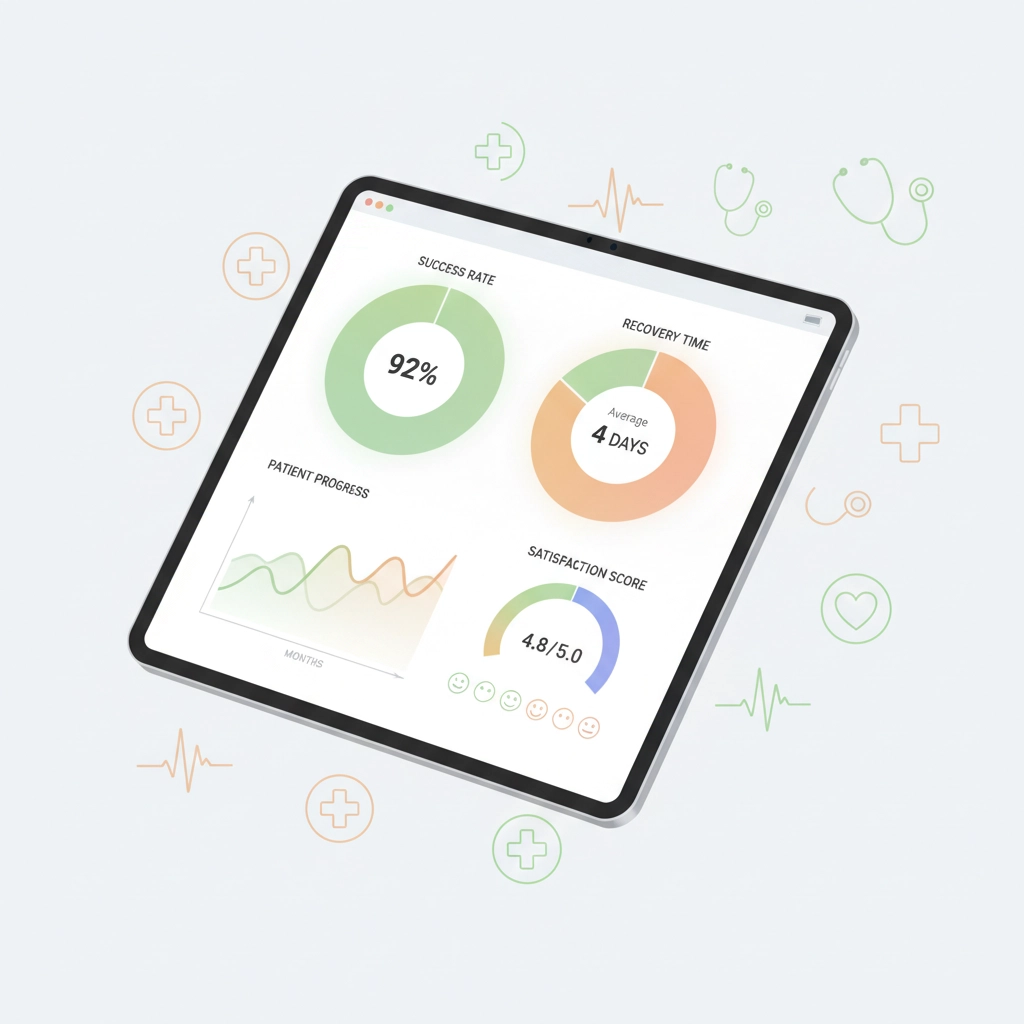
Your RCM system needs to track quality metrics, patient outcomes, and satisfaction scores: not just procedure codes. Think readmission rates, patient experience scores, and preventive care completion rates. These data points directly impact your reimbursement now.
Action step: Start tracking outcome metrics alongside your traditional billing data. If you’re using basic billing software that can’t handle this, it’s time for an upgrade.
2. Payment Models Have Completely Changed
Gone are the days of simple fee-for-service billing. You’re now dealing with bundled payments, capitation, pay-for-performance contracts, and accountable care organization arrangements.
Each model has different rules. Bundled payments mean you get one lump sum for an entire episode of care. Capitation gives you a set amount per patient per month, regardless of services provided. Your RCM needs to handle all these variations seamlessly.
Real example: A primary care practice we work with saw their Medicare Advantage contracts shift to capitation. They had to completely rethink how they tracked profitability per patient, not per visit.
3. Quality Reporting Isn’t Optional Anymore
Those quality metrics we mentioned? They’re not just nice-to-have data points. They’re directly tied to your payment rates. Miss your targets, and you could see significant reimbursement reductions.
Your RCM system needs to generate quality reports automatically, track your performance against benchmarks, and alert you when you’re falling behind targets.
Key insight: The practices thriving under value-based care have real-time dashboards showing their quality metrics alongside financial performance. It’s not separate: it’s integrated.
4. Documentation Accuracy Is Make-or-Break
Under value-based care, accurate documentation isn’t just about compliance: it’s about maximizing your risk-adjusted payments. The better you document patient complexity and conditions, the higher your reimbursement rates.
This means your clinical staff and billing team need to work more closely than ever. Missing a diagnosis code or understating patient complexity can cost thousands in lost revenue.
Action step: Implement regular documentation audits and train your clinical staff on how their notes impact revenue under risk-adjusted models.

5. Patient Engagement Directly Affects Your Bottom Line
Here’s something many practices miss: patient engagement is now a revenue strategy. When patients understand their care plans, follow treatment protocols, and stay engaged with preventive care, your outcomes improve: and so does your reimbursement.
Your RCM should include patient financial engagement tools. Clear billing, easy payment options, and proactive communication about care costs all contribute to better outcomes and fewer bad debts.
6. Technology Integration Is Non-Negotiable
Your billing system can’t operate in isolation anymore. It needs to talk to your EHR, population health tools, patient engagement platforms, and quality reporting systems.
If your current setup requires manual data entry between systems, you’re wasting time and introducing errors that could cost you under value-based contracts.
Reality check: Practices still using separate systems for billing, clinical documentation, and quality reporting are spending 3-4 hours per day on tasks that should be automated.
7. Risk Management Changes Everything
In fee-for-service, your biggest risk was claim denials. In value-based care, you’re taking on financial risk for patient outcomes. Your RCM needs to help you identify high-risk patients and track intervention costs.
This means understanding which patients are likely to become expensive cases and having systems in place to manage their care proactively.
Example: One family practice identified diabetic patients at risk for complications using their RCM data, intervened early with care coordination, and reduced their per-member costs by 12%.
8. Staff Training Is Critical
Your billing team probably knows fee-for-service inside and out. But value-based care requires different skills: understanding quality metrics, managing capitated payments, and working with bundled payment reconciliations.
Don’t underestimate the learning curve. Give your team time and resources to master these new concepts. The practices that invest in comprehensive training see smoother transitions and fewer revenue disruptions.
9. Cash Flow Patterns Will Change
Value-based payments often work differently than traditional billing. You might receive monthly capitation payments upfront, quarterly quality bonuses, or annual shared savings distributions.
Your financial planning needs to account for these different payment cycles. Some revenue will be more predictable, while other payments (like quality bonuses) might be variable.
Planning tip: Create separate tracking for guaranteed payments versus performance-based revenue. This helps with budgeting and cash flow management.
10. Advanced Analytics Are Your Competitive Edge
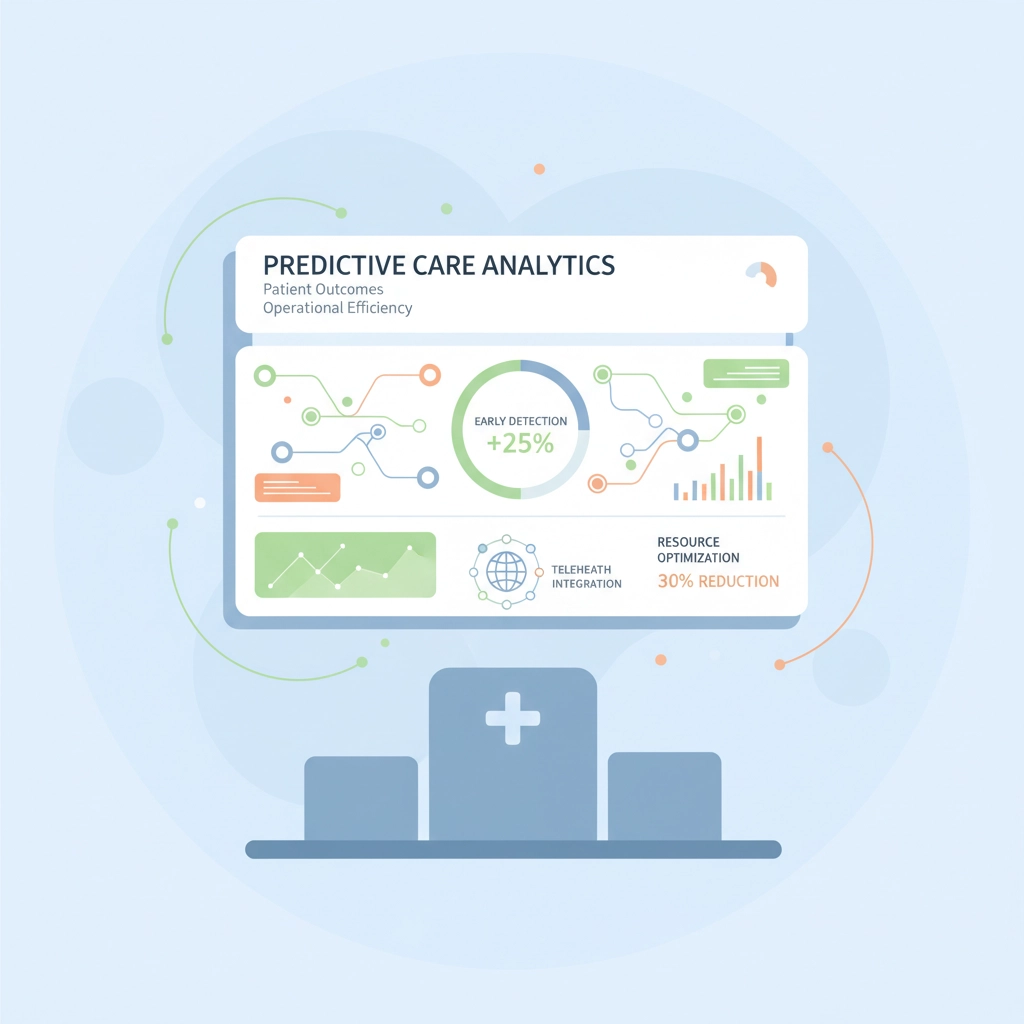
The practices winning at value-based care use data differently. They’re not just looking at last month’s collections: they’re predicting future healthcare needs, identifying care gaps, and optimizing resource allocation.
Your RCM should provide predictive analytics on patient populations, cost trends, and quality performance. This isn’t just billing data anymore: it’s strategic business intelligence.
Success story: A multi-specialty group used RCM analytics to identify patients needing preventive care, reduced emergency department visits by 18%, and earned significant shared savings bonuses.
Making the Transition Work
The shift to value-based care doesn’t happen overnight. Start with one contract or patient population, learn what works, then scale your approach.
Most importantly, don’t try to manage this transition with outdated systems and processes. The practices seeing real success are those that invested in modern RCM solutions designed for value-based care.
The revenue cycle management landscape is changing fast, but the opportunities are real. Practices that get this right aren’t just surviving: they’re building more sustainable, profitable businesses while delivering better patient care.
Ready to assess where your revenue cycle stands? We help practices navigate this transition every day, from technology selection to staff training to performance optimization. Let’s talk about getting your RCM ready for value-based care.
Your patients deserve great care, and you deserve a revenue cycle that supports your success in this new healthcare landscape.